Most founders and e-commerce leaders track conversion rate obsessively. They A/B test headlines, obsess over checkout UX, run paid campaigns with granular attribution. Then they let their fulfillment team set the copy that appears next to the buy button.
'Estimated delivery: 4–7 business days.' Nobody approved that. Nobody tested it. It just ships.
That's a problem, because the delivery promise is one of the highest-leverage conversion variables on your site, and most brands treat it as a logistics footnote.
What the Data Shows
According to Narvar, 60% of shoppers are more likely to choose a retailer that can give them an exact delivery date at the time they order. Not a range. Not a shipping speed. A date.
Retailers who move from vague ranges to accurate estimated delivery dates see conversion improvements of 7–15% depending on category and implementation. For a brand doing $10M in revenue, a 10% conversion lift from a single change to how you communicate delivery is not a logistics win. It's a revenue strategy.
The post-purchase side compounds this. Narvar's case study with Harry Rosen showed a 13% checkout conversion lift and a 16% reduction in WISMO calls after switching to AI-powered estimated delivery dates. Fewer support tickets means lower operational cost. Higher conversion means more revenue from the same traffic. That's a margin improvement, not just a customer service one.
The Gap Between What Retailers Promise and What Customers Need
ShipStation's 2025 Ecommerce Delivery Benchmark Report, which surveyed over 8,000 consumers, found that 60% of shoppers expect free two-day shipping, but only 35% of retailers can actually deliver on that promise. That gap doesn't just affect customer satisfaction. It directly damages conversion at checkout when shoppers can't get clarity on when their order will arrive.
The fix isn't necessarily to ship faster. McKinsey's consumer research is clear that 90% of customers are willing to wait two or three days as long as they know when to expect their order. Certainty converts. Speed is secondary.
Where Most Brands Are Leaving Money
The problem isn't that companies don't care about delivery. It's that the delivery promise lives in logistics systems rather than in the same conversation as the rest of the purchase funnel.
Your CAC is up. Your paid channels are more competitive than they were two years ago. Every incremental improvement in conversion rate has a direct, calculable impact on ROAS and payback period. If you haven't run a structured test on what happens to checkout conversion when you show a specific delivery date versus a range, that's one of the cheapest and highest-return experiments available to you right now.
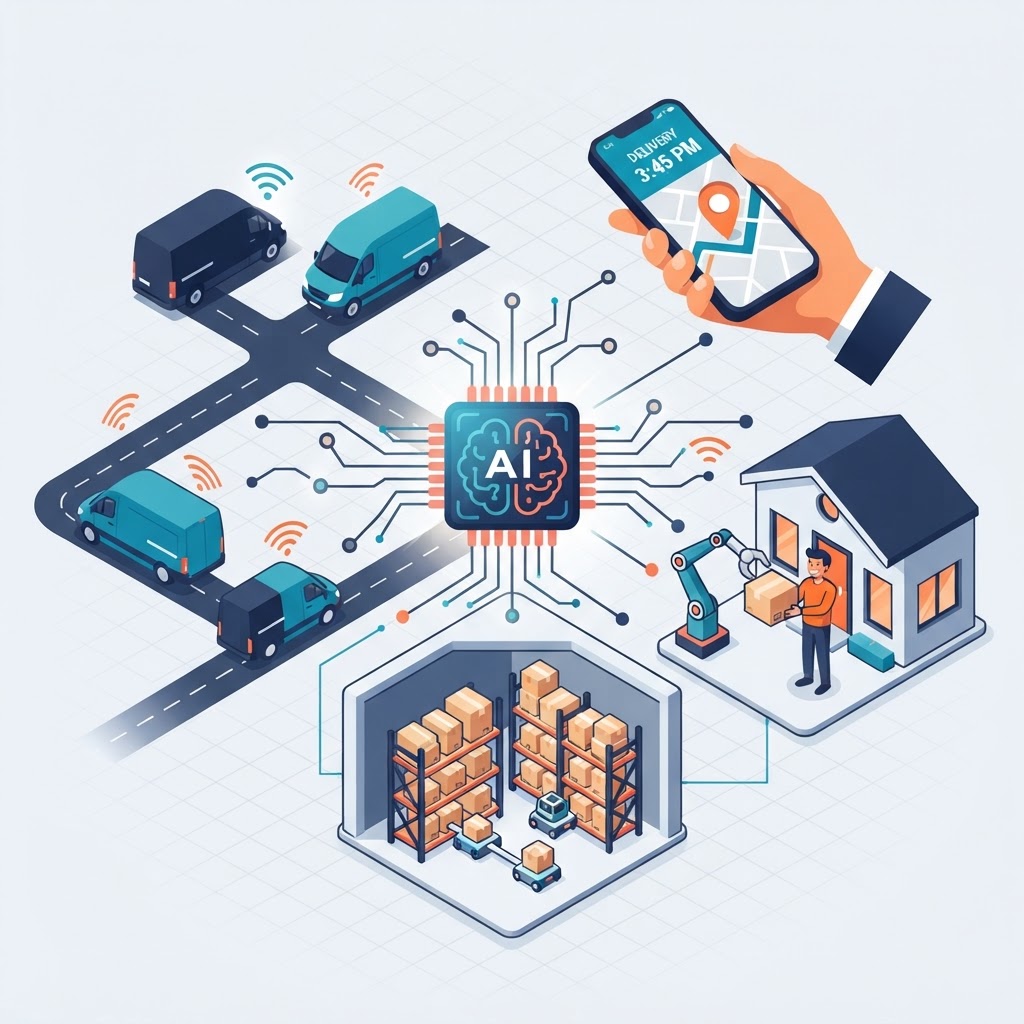
Solutions like FenixCommerce's AI-powered EDD make it possible to show customers an exact delivery date — not a range — on the product page, cart, and checkout. The result: brands consistently see 15–30% conversion lifts and dramatically reduced WISMO inquiries through better post-purchase communication.
You can even measure the incremental revenue impact of delivery date accuracy with rigorous A/B testing, so the ROI isn't guesswork — it's provable.
The delivery promise isn't a logistics detail. It's a conversion lever that most brands haven't pulled.
Ready to test it? Request a demo and see what accurate delivery dates can do for your conversion rate.
FenixCommerce
Sharing insights on AI-powered delivery management, eCommerce optimization, and post-purchase experience.
Related Resources
implement accurate estimated delivery dates to improve your checkout conversion rates
The blog post explicitly highlights how providing an exact delivery date rather than a range significantly boosts conversion and reduces friction at checkout.
measure the true revenue impact of your delivery promise with incrementality testing
Since the article treats delivery promises as a revenue decision, linking to incrementality tools helps brands scientifically validate the conversion lift of these changes.
reduce WISMO support tickets by providing customers with a branded tracking experience
The post discusses how managing expectations post-purchase lowers support costs, which directly connects to the benefits of a branded tracking page.
optimize your inventory routing to fulfill your delivery promise more effectively
The content mentions the gap between consumer expectations and retailer capabilities, which is directly addressed by using intelligent order routing and promising logic.
Get Started
Ready to optimize your delivery experience?
See how FenixCommerce's AI-powered platform boosts conversions and reduces shipping costs.