Most teams bought AI for delivery to cut cost. The ones seeing it show up in retention bought it for a different reason — and that difference is starting to show up in the numbers.
It got sold to you as a cost play
Here's roughly how the pitch usually goes: better routing, fewer failed drop-offs, lower fuel spend. And honestly, that part checks out — AI-driven routing that adjusts for traffic, weather, and driver availability in real time is genuinely cutting mileage and fuel use by 15 to 40% at operators who've implemented it properly, with last-mile costs down 15 to 30%. Those are real savings. They're just not why shoppers are sticking around, or leaving.
The number that should worry a retention team more is this one, from AlixPartners' 2026 Home Delivery Survey of US consumers: 52% will drop a retailer entirely after just one or two bad deliveries. Not a bad year. Two bad experiences. Which means the AI tool your ops team bought to trim cost is quietly being asked to do a second, harder job — keep customers from leaving in the first place.
What's actually on shoppers' minds right now
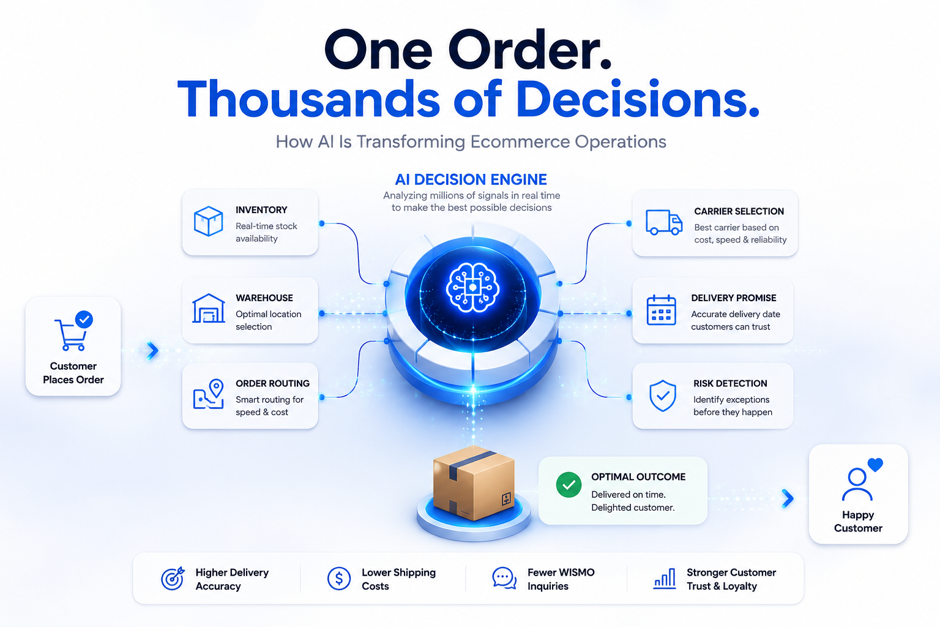
Free delivery in under three days is basically the baseline now, not a perk. Meanwhile 64% of retail executives will tell you, off the record or on it, that home delivery still isn't profitable for their business. Somebody has to close that gap, and most execs surveyed by AlixPartners are betting on AI to do it — specifically for getting the ETA right, routing smarter, and planning capacity before a peak hits, not after.
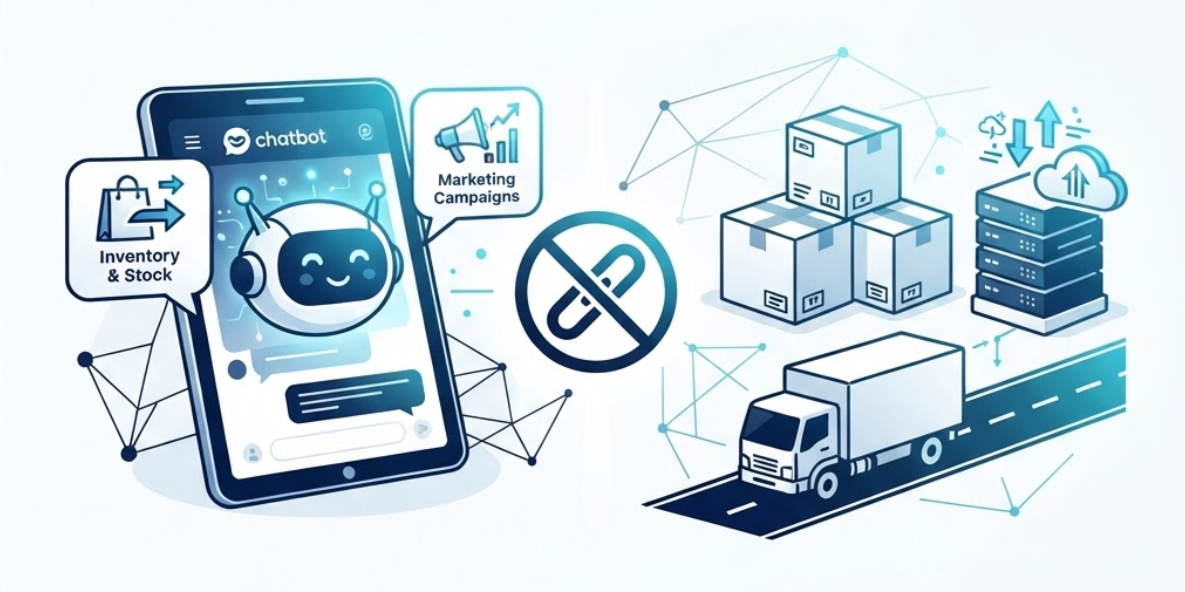
Shoppers have gotten comfortable with AI showing up in their delivery experience too. Three in five US shoppers say they've already used an AI chatbot to track a package or sort out a delivery problem. But that comfort has a short leash. It holds up only when the thing actually works. A chatbot that loops you through three menus and still can't tell you where your package is does more damage to trust than just not having a chatbot.
Where the technology genuinely earns its keep
Pull apart what "AI-driven delivery management" actually means operationally, and it's really three separate jobs wearing one label:
Prediction
Models trained on live carrier and inventory data can lift delivery efficiency by up to 20%, according to DHL's Logistics Trend Radar — though it typically takes 6 to 12 months of real data before the predictions are trustworthy. Worth the wait, though: 96% of shoppers who had a good delivery experience say they'll reorder, and they place about 2.4x more orders a year than shoppers who didn't.
Routing and recovery
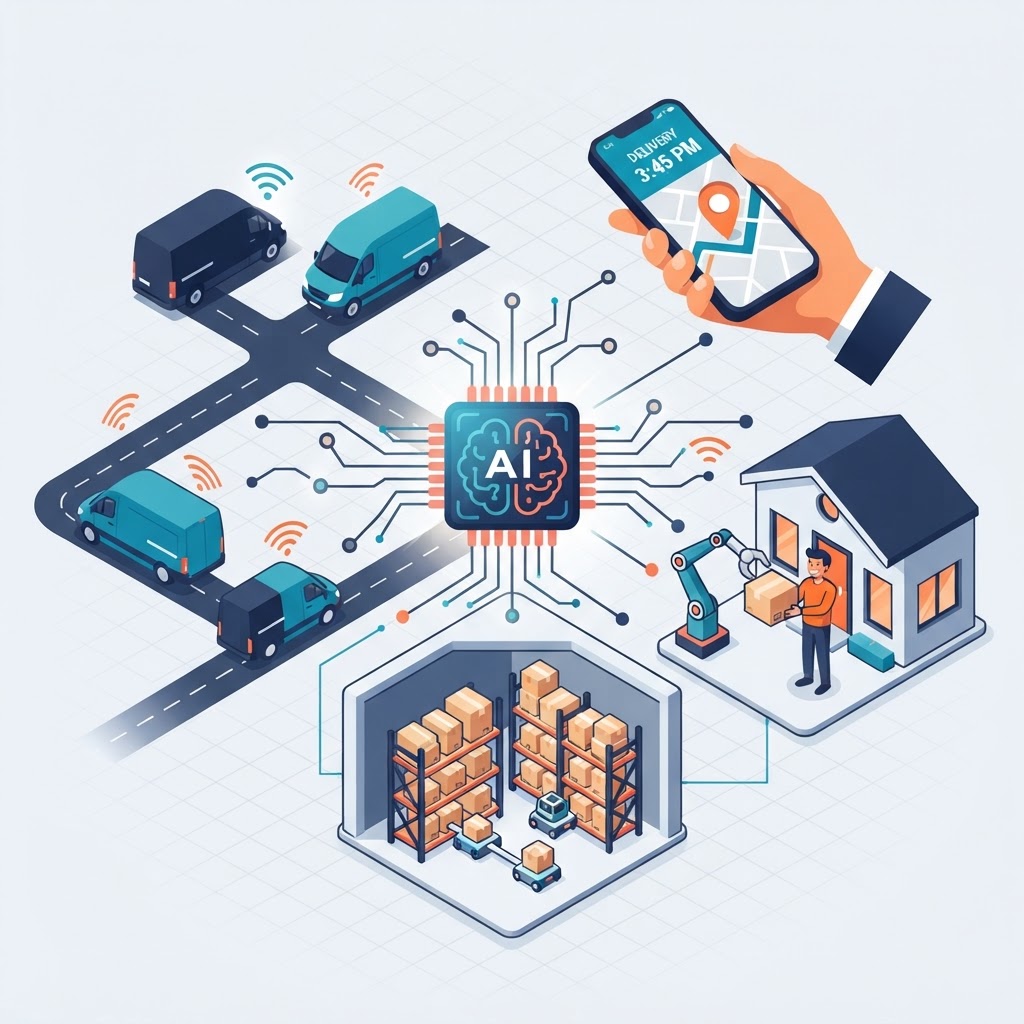
A no-show, a closed road, a driver running late — dynamic rerouting catches it and adjusts before a human even notices. The best fleets are hitting 95 to 98% first-attempt success rates because of it, which matters more than it sounds: a failed delivery costs about $17.78 each and still happens on roughly 1 in 20 last-mile deliveries across the industry.
Communication
This is the one most retailers half-build. UrbanStems cut "where's my order" calls by 63%, and the staff hours spent answering them by 75%, simply by feeding carrier and order data into proactive tracking updates, per project44's case study. Do this well across a market and WISMO-style tickets drop 70% or more.
A prediction nobody hears about might as well not exist. And a route that got optimized perfectly on the back end still feels like a guess to whoever's standing on the porch waiting.
"AI-powered" on the label doesn't mean it's actually better
Everyone's about to say it. ShipStation and Retail Economics' 2026 benchmark research found 90% of retailers worldwide plan to grow their AI investment over the next year or two, and North American merchants are already out front — 61% actively expanding their AI use, 28% with it embedded across multiple functions. So the badge on the box is about to stop meaning much.
What actually separates a system that predicts from one that's just automation with a new coat of paint is whether the accuracy gets better the longer it runs. Best-in-class on-time delivery-date accuracy sits at 95% or above, with 90% as the floor before a promise stops feeling credible. If a tool hasn't moved toward that after months of live data, it's not learning anything — it's a rules engine that got rebranded.
What this actually takes, day to day
Live data, not a static chart. An ETA pulled off a fixed shipping-zone table doesn't get any smarter no matter how much volume runs through it. One built on live carrier status, current inventory, and how drivers actually behave on that route gets more accurate the longer it's in use — which is really the whole argument for calling it AI at all.
Timing that's proactive. Catching a delay before the customer does reads as good service. Finding out about it from the customer, then explaining yourself after the fact, reads as damage control — even when the underlying facts are identical.
Speed of recovery. Exceptions happen at any real volume, that part's not avoidable. What decides whether they cost you a customer is how fast the system catches one and re-routes, re-times, or reaches out — not how rare exceptions are to begin with.
See it on your own delivery ops
None of this needs a new fulfillment network or Amazon-sized logistics. It needs prediction, communication, and recovery treated as one connected system instead of three separate tools that don't talk to each other — which is close to what FenixCommerce's platform was built to do.
Rather look before you talk to anyone? Watch our product videos first.
This piece is part of an ongoing look at how delivery expectations are reshaping ecommerce conversion, from the FenixCommerce team.
FenixCommerce
Sharing insights on AI-powered delivery management, eCommerce optimization, and post-purchase experience.
Related Resources
implement intelligent order routing and capacity planning to guarantee precise delivery dates
The article emphasizes that companies are using AI to solve capacity planning and routing to meet customer expectations, which is the core functionality of Order Promise.
proactively manage customer expectations through automated delivery alerts and proactive notifications
The text highlights how trust is damaged by poor communication, making proactive notifications an essential tool for retaining customers.
transform your branded tracking page into a reliable, AI-driven customer experience
The blog post discusses the need for reliable package tracking and the negative impact of ineffective AI chatbots, which can be solved with an optimized branded tracking page.
leverage autonomous agentic delivery solutions to optimize your last-mile logistics performance
The article explores the shift toward using advanced AI for delivery optimization, which aligns directly with the capabilities of Agentic Delivery.
Get Started
Ready to optimize your delivery experience?
See how FenixCommerce's AI-powered platform boosts conversions and reduces shipping costs.