In tech circles — especially here in Silicon Valley — there’s a pervasive narrative around AI that I believe does more harm than good. Right now, SaaStr is leading the charge.
“AI is coming for your job. Prepare for automation. Fewer people. More code. Better margins.” - Jason Lemkin on LinkedIn
We reject that idea. We reject it not because AI can’t automate certain tasks. Of course it can. But because using AI solely to replace people is the most short-sighted way to deploy it — and the least effective way to build a company that thrives.
🛠️ The Real Value of AI: Work Reimagined
We don’t see AI as a replacement engine. We see it as a transformation engine.
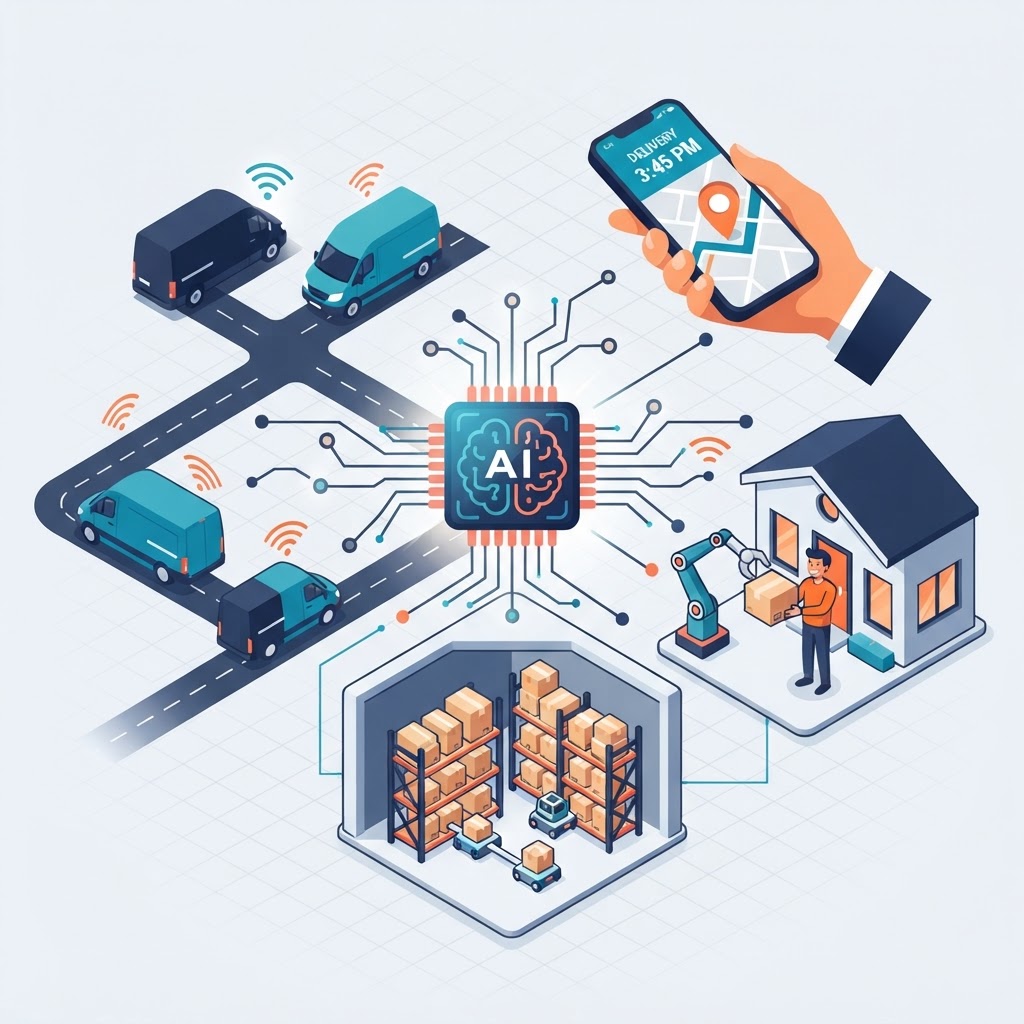
That belief is core to how we’re building our platform — from DeliveryGPT, our generative delivery intelligence engine, to our prompt-based tools for fulfillment strategy and conversion rate optimization.
We’re giving humans in the loop better levers to make better decisions faster, both at Fenix and for our customers
🧠 Real-World Example: Empowering Teams at a Major Apparel Brand
One of our leading customers — a household name in the premium apparel space — is using our beta access to prompt-based evaluations of their carrier network across states like California, Texas, and Florida.
Here’s what changed:
Before: Their operations analysts had to dig through dashboards, export CSVs, and wait on BI to understand which regions had the most delayed deliveries and which upgrades drove conversion. It was reactive. It was manual. It was slow.
Now: With DeliveryGPT, those same analysts can ask
“What happens to revenue per visitor if we improve delivery time by 1 day in Southern California?”
They get results instantly — but they’re not just passive recipients. They interrogate the data, pressure-test assumptions, and even refine the prompts to make sure the answers align with real-world fulfillment constraints.
That’s human-in-the-loop in action: AI as a thinking partner, not a shortcut.
📊 A Shift in Metrics: From Dashboards to Data Design
Here’s a concrete example.
Traditionally, a BI analyst or front-end engineer at an eCommerce brand might be evaluated on:
- Number of dashboards delivered
- Quality of visualizations
- Load times or click-through rates
But we’re entering a new world — one where users query fulfillment data in natural language and get instant answers. Dashboards are being replaced by prompt-native experiences.
So what happens to the BI team?
We believe their value goes up, not down. Because now, their success looks like:
- Building prompt-ready data models
- Structuring manifests so the AI knows what to return
- Designing visual guardrails to prevent misinterpretation
- Enabling decision-makers to explore insights confidently, not just passively consume charts
That’s not about elimination. That’s about elevation.
🔁 What We’re Doing at Fenix
Internally and with our customers, we’re doing a few things differently:
- We measure performance not by what got automated — but by how we empowered teams to make faster, better, more contextual decisions
- We build tools that make complex operations conversational — not tools that pretend complexity doesn’t exist
- We view AI as a partner, not a product. Something that learns with us, adapts with us, and amplifies the best of what our people already bring
🚀 Final Thought: This Isn’t Just Philosophy — It’s Product Strategy
The future of delivery, fulfillment, and conversion optimization won’t be shaped by the companies who eliminate the most roles
It’ll be shaped by those who give their teams superpowers — through GenAI, through data modeling, and through bold rethinking of what “good work” looks like.
At Fenix, that’s the future we’re building.
Not AI instead of humans. AI alongside humans
Akhilesh Srivastava
Sharing insights on AI-powered delivery management, eCommerce optimization, and post-purchase experience.
Related Resources
Discover how agentic AI and autonomous optimization are transforming modern shipping operations
The blog post highlights DeliveryGPT, the company's core AI engine, which aligns directly with the agentic delivery solutions discussed on this page.
Leverage advanced shipping intelligence and data analytics to optimize carrier network performance
The article uses an apparel brand example to describe using AI to evaluate carrier networks, which is the primary function of the shipping intelligence tool.
Measure the true impact of delivery speed improvements on your overall conversion rates
The post discusses asking how revenue per visitor changes with delivery improvements, a key concept covered by incrementality and attribution measurement.
Learn how our comprehensive delivery management platform empowers teams to make faster decisions
The content emphasizes moving away from manual tasks to a more integrated approach, which is the core value proposition of the full delivery management platform.
Get Started
Ready to optimize your delivery experience?
See how FenixCommerce's AI-powered platform boosts conversions and reduces shipping costs.